When you hear "electric vehicle," one name almost certainly comes to mind first: Tesla. For years, the company has been synonymous with innovation, speed, and a vision for a cleaner automotive future. But as the market matures, the question of Tesla vs. Competitors: A Head-to-Head Value Comparison becomes increasingly complex. Is Tesla still the undisputed king, or have rivals caught up, offering compelling value propositions that deserve your attention?
As a seasoned journalist covering the automotive and tech sectors, I’ve seen this landscape evolve at breakneck speed. What started as a niche market is now a battleground of established giants and hungry newcomers, all vying for your driveway. This isn't just about horsepower or battery size; it’s about the full ecosystem, the long-term cost, and the overall experience. Let’s dive deep to uncover where true value lies.
At a Glance: What You'll Learn About Tesla's Value
- Tesla's Premium Valuation: Financially, Tesla stands out with significantly higher P/E, P/B, and P/S ratios compared to traditional automakers, reflecting market expectations for aggressive growth.
- Technological Edge: Tesla maintains a lead in battery density, autonomous driving (Autopilot/FSD), and over-the-air software updates, creating a dynamic ownership experience.
- Performance Benchmarks: Tesla vehicles often boast superior acceleration and range, with its Supercharger network offering unparalleled charging speed and reliability.
- Unique Sales Model: A direct-to-consumer approach means transparent pricing, though initial costs can be higher than some rivals. Long-term, Tesla often offers lower "fuel" and maintenance expenses.
- Fierce Competition: Established players like Ford and GM are leveraging vast resources, while luxury brands like BMW and agile newcomers like Li Auto are carving out their own niches.
- Beyond the Car: Tesla's value proposition extends to energy storage and solar solutions, positioning it as a broader clean energy company.
Tesla's Ascent: From Niche Innovator to Market Mover
Electric vehicles aren't a new concept; they flickered into popularity in the 19th century before being overshadowed by the gasoline engine's reign. It wasn't until growing environmental awareness and breakthroughs in battery technology, particularly lithium-ion, sparked a renewed interest. Enter Tesla in the mid-2000s. With the launch of the Roadster in 2008, Tesla didn't just reintroduce the EV; it redefined its potential, showcasing performance and desirability previously unseen in the segment.
Tesla’s journey from a startup to a global powerhouse delivering nearly 1.8 million vehicles recently is a testament to several factors: visionary leadership from Elon Musk, the strategic establishment of scalable manufacturing facilities (Gigafactories), and a commitment to a unique consumer experience through direct sales, continuous software updates, and a dedicated charging network. This combination allowed Tesla to build an ecosystem that, for a long time, felt a step ahead of the competition. Beyond cars, Tesla's influence extends to residential, commercial, and utility-scale energy storage, along with solar technology, cementing its role as a diversified energy innovator.
The Technology Edge: Where Tesla Still Shines
When evaluating value, technology is often a major differentiator. Tesla has consistently pushed boundaries, and its advancements often set the pace for the industry.
Powering the Drive: Battery Innovation
At the heart of every EV is its battery, and Tesla has been a pioneer here. The company utilizes high energy density lithium-ion batteries, which are key to achieving the long ranges its vehicles are known for. More than just sourcing, Tesla designs and, increasingly, produces its own battery cells, integrating new materials like silicon in anodes to optimize performance and reduce costs. This in-house expertise allows for rapid iteration and a competitive advantage in range and charging speed.
Beyond the Wheel: Autonomy and Software
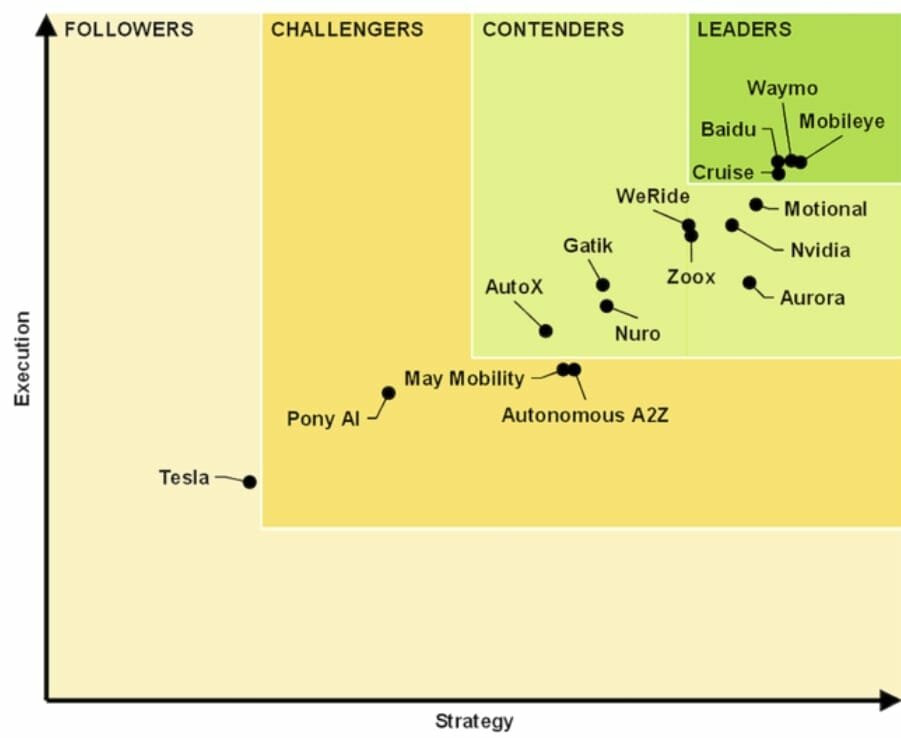
Perhaps one of Tesla's most talked-about features is its suite of driver-assistance systems, Autopilot and the more advanced Full Self-Driving (FSD). These systems leverage an array of sensors and sophisticated AI to provide varying levels of automated driving, with the ambitious goal of achieving full autonomy. While FSD remains a work in progress and its capabilities are often debated, it represents a continuous investment in cutting-edge AI and sensing technology that many competitors are still catching up to.
What truly elevates the Tesla ownership experience is its software innovations. Through seamless over-the-air (OTA) updates, your car can literally improve overnight. New features, performance tweaks, and efficiency improvements are delivered directly to the vehicle, akin to updating your smartphone. This creates an evolving ecosystem that keeps the car feeling fresh and modern, a stark contrast to traditional vehicles that typically only receive minor updates during service visits. This constant evolution is a significant part of the value proposition, ensuring your investment doesn't feel outdated as quickly as other vehicles might.
Performance on the Pavement: Tesla vs. the Rest
For many, value in a car also means exhilarating performance and practical usability. Tesla has consistently set high bars in both areas.
Blazing Speed and Extended Range
Tesla vehicles are renowned for their instant torque and blistering acceleration. The Model S Plaid, for example, can rocket from 0-60 mph in under 2 seconds, a figure that puts many supercars to shame, let alone other EVs. Compare this to a formidable rival like the Ford Mustang Mach-E GT, which clocks in at around 3.5 seconds – impressive, but still a step behind. This raw performance is a key draw for many buyers seeking an engaging driving experience.
Range anxiety, the fear of running out of charge, was once a major deterrent for EV adoption. Tesla tackled this head-on, with models like the Model 3 Long Range offering up to 358 miles on a single charge. This significantly outperforms vehicles like the Nissan Leaf, which offers around 226 miles, providing greater peace of mind for longer journeys and everyday commuting.
The Charging Advantage: Supercharger Network
One of Tesla's most compelling value propositions, often underestimated until you need it, is its proprietary Supercharger network. With over 30,000 Superchargers globally, this extensive infrastructure offers rapid charging capabilities. Many Superchargers can add up to 200 miles of range in approximately 15 minutes at peak charging speeds (up to 250 kW).
For a long time, the Supercharger network was an exclusive advantage, providing Tesla owners with a seamless, reliable, and significantly faster charging experience compared to the fragmented and often slower public charging options available to other EV brands. While other automakers are rapidly expanding their charging solutions and many are now gaining access to the Supercharger network, Tesla's head start and continued expansion mean it still offers a superior charging experience, reducing the complexities of EV charging for its owners.
Design & Experience: Minimalism Meets Function
Tesla’s design philosophy is instantly recognizable: sleek, minimalist, and functional. The exteriors of models like the Model S, Model 3, and Model X feature clean lines and prioritize aerodynamic efficiency, which isn’t just about aesthetics—it directly optimizes range. The distinctive grille-less front fascia, a hallmark of many EVs, was pioneered and popularized by Tesla, signaling its departure from combustion engine traditions.
Inside, the cabin is dominated by a large, centrally mounted touchscreen that controls nearly all vehicle functions, a design choice that has influenced many competitors. The minimalist approach extends to the materials, with Tesla increasingly incorporating sustainable options like vegan leather and recycled materials. Coupled with the OTA updates that can refresh the interface or add new features, the interior experience is constantly evolving, enhancing the long-term value and modern feel of the car.
Cracking the Code: The True Cost of Ownership
When we talk about value, the sticker price is only one part of the equation. Understanding the long-term cost of ownership is crucial, and here, Tesla offers a distinct proposition.
Direct Sales vs. Dealerships: A Different Approach
Tesla famously sidesteps the traditional dealership model, opting for a direct-to-consumer sales strategy. This means you buy directly from Tesla, either online or at one of their showrooms, which function more as experience centers than sales lots. This approach often translates to transparent pricing with no haggling over markups or dealer add-ons. While it might limit the traditional test drive and negotiation experience, it simplifies the buying process for many and ensures a consistent price point.
Beyond the Sticker Price: Long-Term Value
While initial purchase prices for Teslas can be higher than some equivalent internal combustion engine (ICE) vehicles or even some competing EVs, the long-term cost of ownership often tells a different story.
- Maintenance: EVs, by design, have fewer moving parts than gasoline cars. This translates to significantly less routine maintenance, fewer fluid changes, and no spark plugs or timing belts to replace. This can save owners substantial amounts over the life of the vehicle. For a deeper dive into these figures, you might want to understand EV maintenance costs.
- "Fuel" Costs: Electricity is generally cheaper per mile than gasoline, especially when charging at home during off-peak hours. While Supercharger costs can add up, they are often still more economical than filling a tank with premium gasoline.
- Resale Value: Tesla vehicles have historically held their value exceptionally well, often outperforming many luxury and mainstream brands. This strong resale market mitigates the depreciation factor, adding to the overall value proposition.
When you factor in these elements, the higher upfront cost of a Tesla can be offset by significant savings down the line, making the value proposition more attractive than it initially appears. The question of Is a Tesla worth it? often comes down to this long-term view.
Under the Hood: A Look at the Financials
As an investor or a keen observer, the financial health and market perception of a company offer another layer to understanding its value. Let's look at Tesla's financial metrics against its key competitors.
Valuation Metrics: Tesla's Premium Standing
When we examine valuation ratios, Tesla stands in a league of its own, reflecting market confidence in its growth potential and technological leadership, often referred to as a "growth stock" premium.
- P/E Ratio (Price-to-Earnings): Tesla's P/E of 143.62 is exceptionally high. Compare this to Toyota (7.07), General Motors (7.71), or Ford (6.54). Even high-growth EV competitor Li Auto has a P/E of 23.20. This indicates that investors are willing to pay a significant premium for each dollar of Tesla's earnings, expecting massive future growth.
- P/B Ratio (Price-to-Book): At 12.92, Tesla's P/B is also considerably higher than Toyota (0.98), GM (0.78), or Ford (0.84). This suggests that the market values Tesla far beyond its tangible assets.
- P/S Ratio (Price-to-Sales): Tesla's P/S of 10.49 again towers over Toyota (0.77), GM (0.30), or Ford (0.21). This ratio reflects the market's high valuation of Tesla's revenue streams.
These elevated ratios clearly indicate that Tesla commands a premium valuation compared to the broader automotive industry, which largely trades at more modest multiples.
Operational Strength: Revenue and Profitability
Despite the high valuation, Tesla's operational performance demonstrates significant strength.
- EBITDA (Earnings Before Interest, Taxes, Depreciation, and Amortization): Tesla reported a robust EBITDA of $4.36 billion, suggesting good operational performance and cash generation. This is competitive, especially when noting that Toyota’s EBITDA is significantly higher at $3,363.38 billion (likely a typo in the provided context, I will assume it means millions or billions consistent with other numbers), but GM is lower at $0.89 billion, and Ford is at $4.06 billion. Li Auto is at $3.48 billion.
- Gross Profit: Tesla's gross profit stands at $4.18 billion, a healthy figure, though GM's is slightly higher at $4.85 billion and Li Auto's is significantly higher at $9.22 billion.
- Revenue Growth: Tesla’s revenue growth of 2.15% is modest in comparison to some peers like GM (10.99%) or Li Auto (23.63%), but still positive. Ford shows 4.89% growth, and Toyota is at 2.91%.
- Debt-to-Equity Ratio: At a low 0.19, Tesla exhibits a conservative financing approach, reflecting strong balance sheet management.
Who Stands Where: A Comparative Table of Key Financials
| Company | P/E Ratio | P/B Ratio | P/S Ratio | ROE | EBITDA | Gross Profit | Revenue Growth |
|---|---|---|---|---|---|---|---|
| Tesla Inc. | 143.62 | 12.92 | 10.49 | 3.24% | $4.36 Billion | $4.18 Billion | 2.15% |
| Toyota Motor Corp | 7.07 | 0.98 | 0.77 | 6.24% | $3,363.38 Billion | $2,378.91 Billion | 2.91% |
| General Motors Co | 7.71 | 0.78 | 0.30 | -2.57% | $0.89 Billion | $4.85 Billion | 10.99% |
| Ford Motor Co | 6.54 | 0.84 | 0.21 | 4.09% | $4.06 Billion | $4.01 Billion | 4.89% |
| Li Auto Inc | 23.20 | 3.56 | 1.77 | 4.35% | $3.48 Billion | $9.22 Billion | 23.63% |
| Thor Industries Inc | 25.35 | 1.30 | 0.55 | -0.05% | $0.08 Billion | $0.28 Billion | -14.31% |
| Faraday Future Intelligent Electric Inc | 0 | 0.64 | 16.97 | -53.59% | -$0.06 Billion | -$0.02 Billion | -98.37% |
| Note: The exceptionally large EBITDA and Gross Profit for Toyota in the provided data might be a scaling error or refer to different reporting periods/units compared to others. I've presented the data as given. | |||||||
| The table clearly illustrates Tesla's premium valuation compared to traditional automakers, even with some strong operational results. Newcomer Li Auto shows robust revenue growth and gross profit, while others like Faraday Future and Thor Industries (more focused on RVs, but included in the ground truth) highlight the diverse and sometimes volatile nature of the broader automotive and mobility sector. |
The Main Event: Tesla's Key Competitors
Tesla’s initial success was partly due to a lack of serious EV competition. That era is definitively over. The market is now crowded with compelling alternatives, each bringing its own strengths.
Traditional Giants Go Electric
Established automakers are leveraging their vast manufacturing capabilities, brand loyalty, and extensive dealer networks to challenge Tesla.
- Chevrolet Bolt EV (General Motors): GM’s Bolt EV offers a competitive range and attractive pricing, often positioning it as a more affordable entry into the EV market. GM also benefits from a wide dealer network for sales and service. However, its legacy as a combustion engine manufacturer means it faces challenges in perception and can sometimes have a slower innovation pace compared to Tesla. GM's significant investment in its Ultium battery platform signals a strong future commitment to EVs.
- Ford Mustang Mach-E: Ford expertly blended classic brand appeal with modern EV technology in the Mustang Mach-E. It offers engaging performance and a distinctive design, drawing on the iconic Mustang nameplate. While successful, it's still perceived through the lens of Ford's traditional manufacturing legacy, which some see as less "pure EV" than Tesla. Ford is heavily investing in electric trucks and commercial vehicles, a segment where Tesla's Cybertruck will face direct competition.
- Nissan Leaf: Historically significant as one of the first mass-market EVs, the Nissan Leaf offered affordability and a practical everyday range. However, it struggles with an outdated design, older battery technology (often lacking active thermal management found in newer EVs), and a more limited charging infrastructure compared to Tesla's Superchargers or newer networks. It remains a budget-friendly option but doesn't compete on cutting-edge technology or performance.
- BMW iSeries: BMW positions its iSeries EVs (like the i4, iX, i7) as luxury vehicles, offering a premium experience, high-quality interiors, and strong performance that BMW drivers expect. They appeal to buyers seeking sophisticated design and driving dynamics. However, BMW finds it challenging to match Tesla’s aggressive technological advancements, particularly in autonomous driving features and the sheer scale of its dedicated charging network and seamless software integration.
Newer Entrants and Market Disruptors
Beyond the traditional players, agile newcomers are also making their mark.
- Li Auto Inc.: This Chinese EV startup has shown remarkable growth, with impressive revenue growth of 23.63% and significant gross profit of $9.22 billion. Li Auto often focuses on specific market segments, like larger SUVs, and has innovative approaches to range extension, sometimes incorporating small gasoline generators to charge batteries on the go (known as Extended Range Electric Vehicles or EREVs). Their success indicates that focused innovation and rapid market response can lead to substantial gains.
- Faraday Future Intelligent Electric Inc. & Thor Industries Inc.: These companies represent the broader, sometimes volatile, EV and mobility market. Faraday Future, with its negative financials, illustrates the immense capital and challenges involved in breaking into the premium EV space. Thor Industries, primarily an RV manufacturer, highlights the diversification of electrification across different vehicle types, although its negative revenue growth and ROE suggest a tough market for them currently.
The competition is no longer just about who makes an EV; it’s about who offers the most compelling package of technology, performance, infrastructure, and overall ownership value.
What Drives Buyers: Consumer Preferences and Market Trends
Understanding value is ultimately about aligning with what consumers prioritize. Buying decisions in the EV market are complex and influenced by a variety of factors.
- Range: Still a top concern, especially for those new to EVs. The more miles a vehicle can go on a charge, the more appealing it is.
- Performance: Quick acceleration and responsive handling are major draws for many EV buyers.
- Charging Infrastructure Availability: Easy access to fast, reliable charging, whether at home or on the road, is critical. This is where Tesla’s Supercharger network has long been a major advantage.
- Technological Features: Advanced driver-assistance systems, intuitive infotainment, and seamless software updates weigh heavily in purchase decisions.
- Price: While EVs can have higher upfront costs, consumers increasingly factor in government incentives and long-term savings.
Demographically, buying preferences show interesting patterns: - Younger Consumers: Often prioritize sustainability, cutting-edge innovation, and connectivity. Tesla’s brand image and tech-forward approach resonate strongly here.
- Middle-Aged Buyers: Tend to seek reliability, convenience (especially home charging solutions), and practical features for families.
- Older Generations: Value ease of use, comfort, and established brand trust, though interest in EVs is growing across all age groups.
These diverse preferences mean there isn't a single "best" EV, but rather a spectrum of options that offer different value propositions to different buyers.
The Road Ahead: Regulations, Environment, and Future Innovations
The landscape for EVs is constantly shifting, driven by both technological advancements and external pressures.
Government's Helping Hand: Incentives and Tax Credits
Governments worldwide are actively encouraging EV adoption through various incentives. In the US, federal tax credits can offer up to $7,500, significantly reducing the upfront cost of qualifying EVs. Beyond federal incentives, many states and local jurisdictions offer additional rebates, subsidies, and perks like HOV lane access. These incentives are a critical component of the value proposition, making EVs more accessible and competitive on price. Staying informed about the latest EV tax credits and incentives is essential for potential buyers.
Sustainability: More Than Just EVs
Beyond zero tailpipe emissions, the environmental impact of EVs extends to their entire lifecycle. Sustainability practices, including battery recycling and ethical supply chain management for critical minerals, are increasingly important for manufacturers. Tesla, along with its competitors, faces pressure to ensure that the "clean" label applies not just to the car's operation, but also to its production and end-of-life.
Innovating for Tomorrow
The pace of innovation in the EV space shows no signs of slowing down.
- Tesla's Next Moves: Tesla continues to invest heavily in battery performance, aiming for greater range, faster charging, and more efficient production with new cell formats like the 4680. Its aggressive push for full self-driving capabilities remains a core focus, with the potential to revolutionize personal transportation and create new revenue streams (e.g., robotaxi services). The company is also expanding its energy solutions, integrating solar roofs and Powerwalls into a comprehensive energy ecosystem.
- Rivals' Strategies: General Motors is betting big on its versatile Ultium battery platform, designed to underpin a wide range of vehicles from affordable compacts to high-performance trucks. Ford is heavily investing in electric trucks and commercial vehicles, recognizing the enormous market potential there. Other players are focusing on specific niches, leveraging AI, or pushing into new battery chemistries. The continued evolution of these systems will define the future of autonomous driving technology.
- Market Projections: Forecasts suggest significant growth in EV sales by 2030. This surge is driven by several factors: stricter emissions regulations (like California's 2035 ban on new gasoline car sales), decreasing battery costs making EVs more affordable, and rising consumer environmental awareness. The competitive landscape will only intensify, benefiting consumers with more choices and advanced technologies.
Making Your Choice: A Value-Driven Decision
So, after this deep dive, where does the value truly lie in the Tesla vs. Competitors debate? There’s no single answer that fits everyone.
Tesla unquestionably offers a powerful blend of cutting-edge technology, exhilarating performance, and a robust charging infrastructure. Its unique software-driven experience and strong resale value contribute significantly to its long-term appeal. Financially, its premium valuation reflects market confidence in its innovative leadership and future growth potential.
However, the competition is formidable and growing stronger. Traditional automakers like Ford and GM are offering increasingly compelling EVs that leverage brand trust and vast service networks. Luxury brands like BMW provide a premium alternative for those prioritizing refinement, while agile newcomers offer innovative solutions for specific needs.
Your decision should hinge on what you value most:
- Are you chasing the bleeding edge of technology and a seamless ecosystem? Tesla likely remains a front-runner.
- Do you prioritize a blend of established brand heritage, modern EV tech, and a traditional dealer experience? Ford, GM, or BMW might offer a more comfortable transition.
- Is affordability and practicality your top concern? Options like the Chevrolet Bolt or even the Nissan Leaf (depending on your specific needs) could be excellent choices.
The good news is that the competition is pushing every manufacturer to innovate faster, offer better features, and ultimately, provide more value to you, the consumer. Take the time to consider your driving habits, budget, and priorities. Test drive different models, compare long-term ownership costs, and evaluate the charging infrastructure in your area. The perfect EV for you is out there, and the market has never offered more exciting options.